Time-Based vs. Usage-Based Preventive Maintenance
Compare time-based and usage-based preventive maintenance to find the right strategy for your equipment and operations.
BLOG
8/18/20251 min read

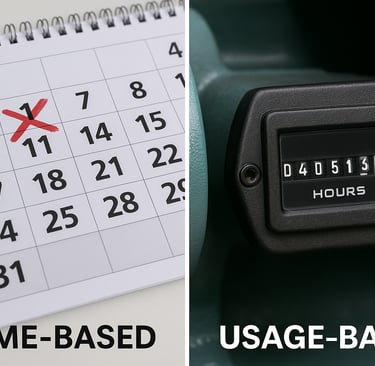
Preventive maintenance can be implemented in different ways, with the two most common methods being time-based and usage-based. Time-based maintenance involves performing tasks at regular intervals, such as monthly, quarterly, or annually. This approach is simple to schedule and ensures consistency, making it ideal for equipment that has predictable wear patterns or compliance requirements.
On the other hand, usage-based maintenance triggers actions after specific usage milestones are reached. For example, a machine may need servicing after every 500 operating hours or a vehicle may require an oil change after every 10,000 miles. This method is often more cost-efficient since tasks are performed only when necessary, based on actual wear rather than arbitrary dates.
The best choice depends on the type of equipment and industry. Some companies even combine both strategies, applying time-based schedules for safety-critical systems while using usage-based triggers for equipment with variable workloads. A hybrid approach allows organizations to optimize resources while maximizing equipment reliability.
Disclaimer
The content is for informational and educational purposes only. While we strive for accuracy, we make no guarantees about completeness or reliability. The opinions expressed are those of the authors and do not reflect professional engineering advice. Always consult a qualified expert before making technical or safety-related decisions.
© 2025. All rights reserved.
Privacy Policy
Engineering Lovers is a participant in the Amazon Services LLC Associates Program, an affiliate advertising program designed to provide a means for sites to earn advertising fees by advertising and linking to engineering-lovers.eu