Preventive Maintenance: Strategies, Benefits, and Best Practices for Equipment Reliability
Discover how preventive maintenance improves equipment reliability, reduces downtime, and extends asset lifespan. Learn proven strategies and best practices for an effective maintenance program.
BLOG
8/18/20252 min read

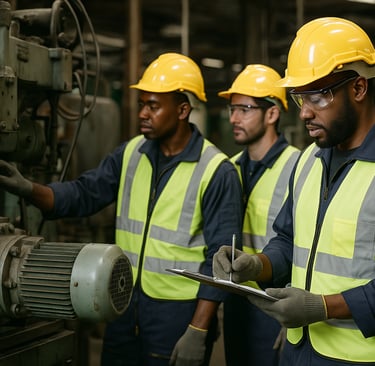
In today’s competitive industries, unplanned equipment failures can result in costly downtime, safety risks, and productivity losses. Preventive maintenance (PM) is a structured approach that addresses these challenges by proactively inspecting, servicing, and repairing assets before failures occur. Unlike reactive maintenance—which responds to breakdowns after they happen—preventive maintenance ensures that machines and systems operate at peak efficiency throughout their lifecycle.
What Is Preventive Maintenance?
Preventive maintenance is a scheduled process of maintaining equipment based on time intervals, usage cycles, or condition-based triggers. The goal is to identify wear, misalignment, or potential faults early and correct them before they cause disruptions.
Examples of preventive maintenance activities include:
Lubricating moving parts
Replacing filters and belts
Inspecting bearings and seals
Testing safety systems
Calibrating instruments
Benefits of Preventive Maintenance
Implementing a preventive maintenance strategy provides organizations with multiple advantages:
Reduced Downtime – Scheduled interventions minimize unexpected failures.
Extended Equipment Lifespan – Regular care prevents excessive wear and tear.
Cost Savings – Early detection of issues lowers repair and replacement costs.
Improved Safety – Functional checks reduce risks of accidents and compliance violations.
Operational Efficiency – Well-maintained equipment consumes less energy and operates consistently.
Types of Preventive Maintenance
Time-Based Maintenance (TBM)
Tasks scheduled at fixed intervals (e.g., monthly inspections, quarterly oil changes).Usage-Based Maintenance (UBM)
Service is triggered after a set number of operating hours, mileage, or production cycles.Predictive Maintenance (PdM)
Advanced form of PM using sensors and data analytics to forecast failures before they occur.
Best Practices for an Effective Preventive Maintenance Program
Develop an Asset Inventory
List all critical equipment and prioritize based on business impact.Use a CMMS (Computerized Maintenance Management System)
Automate scheduling, record keeping, and task tracking for efficiency.Train Maintenance Teams
Ensure technicians are skilled in both routine tasks and diagnostic procedures.Set Measurable KPIs
Monitor metrics such as mean time between failures (MTBF), mean time to repair (MTTR), and overall equipment effectiveness (OEE).Continuously Improve
Analyze data, refine schedules, and adopt new technologies like IoT monitoring.
Conclusion
Preventive maintenance is not just about preventing breakdowns—it’s about building a culture of reliability and efficiency. Organizations that adopt proactive maintenance practices benefit from lower costs, safer workplaces, and stronger operational performance.
By integrating the right tools, training, and strategies, businesses can transform maintenance from a reactive burden into a strategic advantage.
Disclaimer
The content is for informational and educational purposes only. While we strive for accuracy, we make no guarantees about completeness or reliability. The opinions expressed are those of the authors and do not reflect professional engineering advice. Always consult a qualified expert before making technical or safety-related decisions.
© 2025. All rights reserved.
Privacy Policy
Engineering Lovers is a participant in the Amazon Services LLC Associates Program, an affiliate advertising program designed to provide a means for sites to earn advertising fees by advertising and linking to engineering-lovers.eu